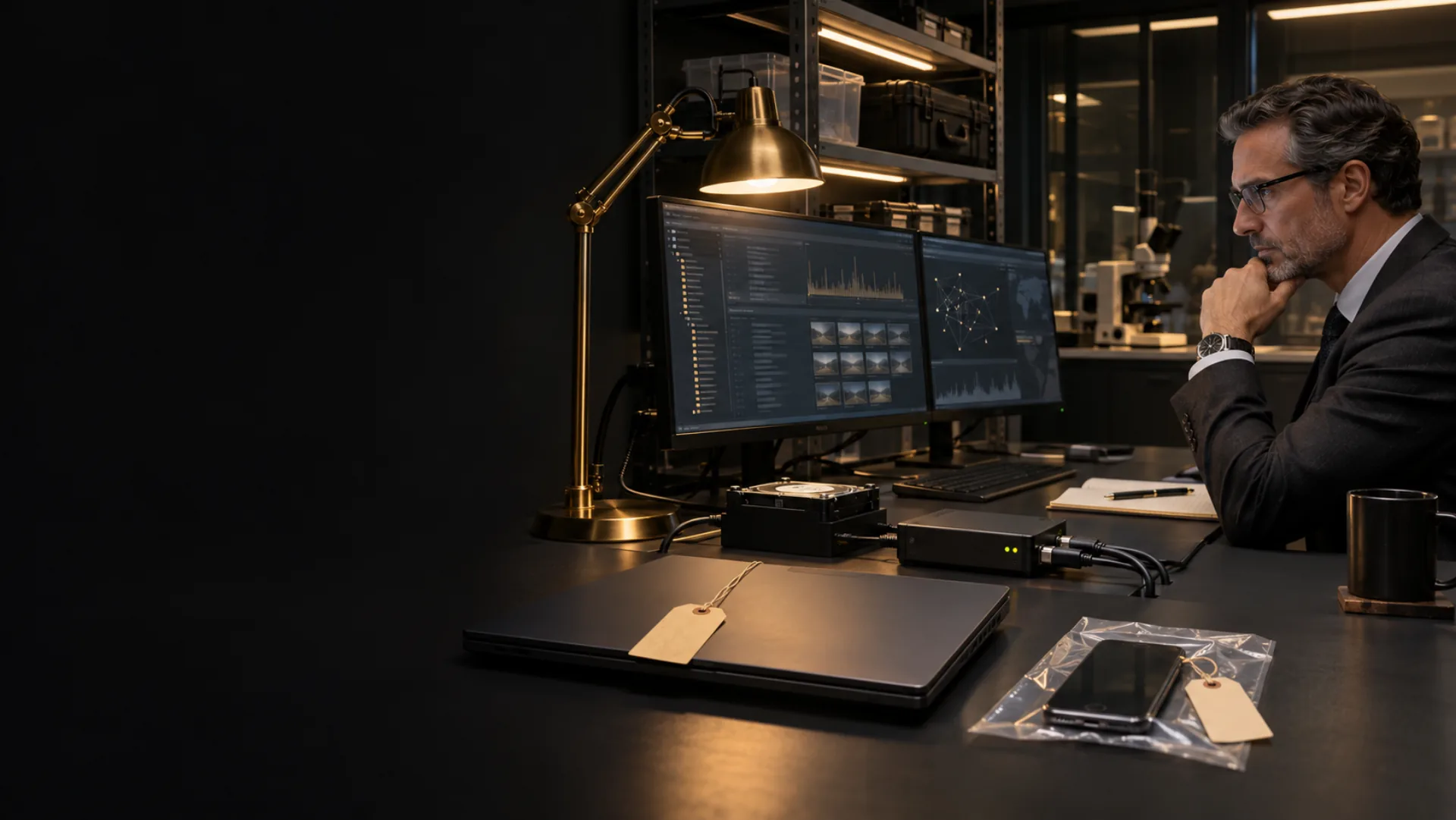
Digital evidence is fragile. Devices synchronize, accounts rotate records, applications update and users unintentionally change metadata simply by opening files. A sound examination begins with authority, preservation and a documented acquisition plan.
Analysis then connects relevant artifacts into a chronology while accounting for system time, account sharing, missing records and other limitations. Findings should remain understandable without concealing uncertainty behind tool output.
Los Angeles digital evidence services
Digital Forensics in Los Angeles From Preservation Through Clear Findings
Digital evidence can change before anyone realizes it matters. Computers continue writing system data, mobile applications synchronize, cloud accounts apply retention rules and users alter metadata through ordinary activity. When a dispute, internal investigation or suspected incident involves electronic records, the first priority is to identify the relevant sources and preserve them under documented procedures.
A defensible digital-forensics process protects the source, documents custody and connects relevant artifacts to the question being investigated.
FalconGate provides digital forensics in Los Angeles for attorneys, businesses and individuals who need careful preservation, focused examination and understandable reporting. Matters may involve computers, storage media, email, supported mobile-device data, cloud exports, online content or an existing forensic collection. The scope is tied to the client’s lawful authority, the relevant date range and the decision the findings must support.
Forensic software can locate thousands of artifacts, but volume is not the same as proof. A sound examination explains how an artifact was created, whether it can be associated with a user or device, how timestamps should be interpreted and which alternative explanations remain possible. FalconGate reports supported findings without implying certainty that the underlying data cannot provide.
Preserving Computers, Drives and Digital Accounts
Preservation begins by identifying devices, accounts, custodians and locations that may contain relevant information. A laptop may be only one source: responsive data may also exist on external drives, network storage, email systems, cloud platforms, backup media and mobile devices. The preservation plan considers ownership, consent, organizational authority, legal process, encryption and the risk that data will change or expire.
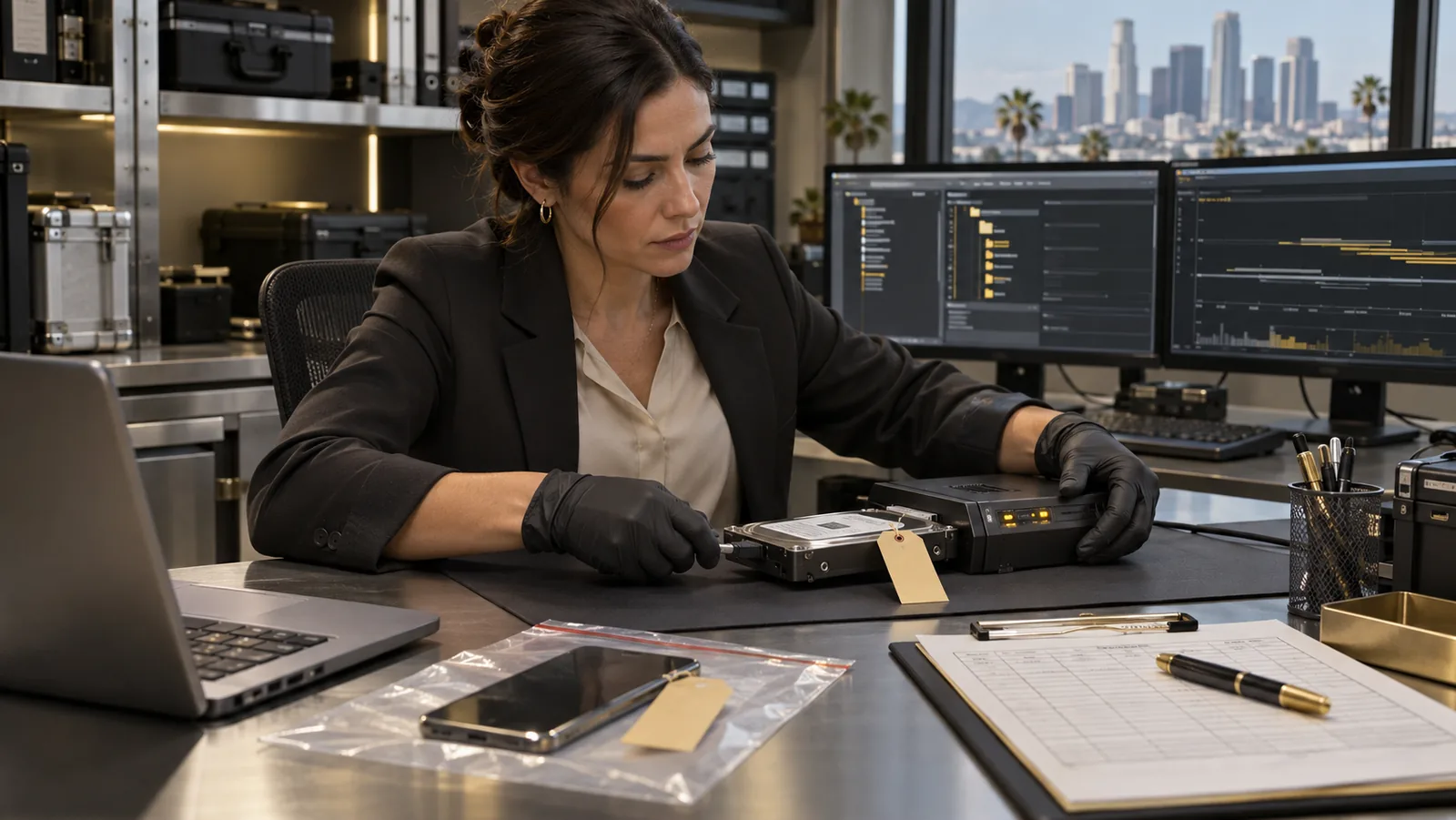
When appropriate, storage media is acquired through forensic tools and hardware designed to avoid changing the source. Identifying information, condition, acquisition steps and transfers are documented. Cryptographic hash values can verify that a forensic copy remains consistent. If a targeted collection is more proportionate than a full image, the report describes what was collected and the limits that decision places on later analysis.
Computers, laptops and supported storage media
External drives, memory cards and connected-device history
Email, cloud and collaboration-platform exports
Supported mobile-device and application data
Web pages, social content and other changing online evidence
Chain of Custody and Evidence Integrity
Chain of custody records who possessed an item, when it changed hands and what was done with it. It does not by itself prove every technical fact, but incomplete custody documentation can create avoidable questions about identity, handling and integrity. FalconGate maintains an evidence inventory and records material transfers, acquisition details and working-copy validation.
The original source is protected whenever the technology and circumstances permit, and analysis is performed on a validated forensic copy or controlled export. Evidence files, examiner notes, tool output and reports are stored with access controls appropriate to the engagement. Sensitive material is transferred through an approved method rather than ordinary email when volume, confidentiality or legal restrictions require greater protection.
File Activity, Deletion and Data Transfer Analysis
Computer examinations may reconstruct file creation, modification, access, copying and deletion activity. Relevant artifacts can include file-system metadata, recent-item lists, shortcut files, application history, browser downloads, cloud synchronization records, connected USB devices and operating-system logs. No single artifact should be interpreted outside the mechanism that created it.
A deleted-file record may show that a file once existed without proving who deleted it or why. A USB connection may identify a storage device without establishing which files were copied. A file timestamp may reflect copying, synchronization, restoration or application behavior rather than the event assumed by the viewer. FalconGate compares independent artifacts and states the level of support for each conclusion.
Relevant file and folder chronology
Deletion and recoverability assessment
USB and external-device connections
Download, browser and cloud-sync activity
Indicators of copying, wiping or concealment
Email, Mobile and Cloud Evidence
Modern matters rarely stay on one computer. Email headers, server exports, mobile-device data and cloud account records may provide context that a local file cannot. Collection methods vary by platform, device state, account permissions, retention and available legal authority. FalconGate identifies which source is most likely to preserve the relevant artifact before recommending collection.
Email analysis may evaluate message headers, authentication results, routing information, attachments and chronology. Mobile work may address supported messages, media, application records and device metadata within the limits of the extraction. Cloud analysis may compare synchronized files, account events or provider exports. Access is never obtained through password guessing, spyware or unauthorized account entry.
Los Angeles Litigation and Internal Investigations
Los Angeles digital-forensics matters may support civil litigation, employment disputes, intellectual-property claims, fraud investigations, business-email compromise, family-law issues or internal reviews. Each setting has different preservation duties, privacy concerns and reporting needs. When counsel is involved, the technical plan should be coordinated with the legal strategy and relevant discovery obligations.
Local availability can help with device intake, evidence inventory, attorney conferences and time-sensitive preservation, but the analysis remains driven by the evidence rather than geography. FalconGate can work with Los Angeles counsel and organizations while coordinating remote sources, cloud providers and qualified specialists when a matter extends beyond Southern California.
Clear Reports and Practical Deliverables
The final deliverable depends on how the findings will be used. An early assessment may produce a preservation memorandum or evidence inventory. A focused examination may produce a source-indexed chronology with relevant screenshots and artifact references. Litigation support may require a declaration, expert report, rebuttal analysis, exhibits or preparation for deposition and testimony.
FalconGate separates technical observations, client-provided facts, analytical conclusions and unresolved limitations. Reports identify the examined sources, relevant methods, important date and time assumptions, missing records and questions that would require additional evidence. Clear limitations strengthen the work by showing the reader exactly where the evidence ends.
Preserve First, Then Let the Evidence Answer the Question
Digital forensics is most useful when collection and analysis are designed around a defined issue. FalconGate protects relevant sources, applies documented methods and explains the resulting artifacts in practical language for counsel, businesses and individuals in Los Angeles.
Digital forensics is the defensible preservation, examination and interpretation of electronically stored information from devices, accounts and media.
Will examination alter the original evidence?
A proper workflow preserves the source and performs analysis on validated forensic copies or controlled exports whenever technically and legally appropriate.
Can deleted information always be recovered?
No. Recovery depends on the device, storage technology, encryption, application behavior, retention, subsequent use and acquisition method.
How quickly should digital evidence be preserved?
As soon as the evidence becomes relevant and lawful authority is confirmed. Continued device use, synchronization and provider retention can change or remove important data.
Do you provide digital forensics for Los Angeles attorneys?
Yes. FalconGate supports counsel with preservation planning, forensic examination, opposing-work review, clear reporting and coordination for litigation-related digital evidence.
Confidential first step
Bring the Question. Protect the Evidence.
Describe the matter, jurisdiction and deadline. FalconGate will review scope, conflicts and the safest next step.